Cass. civ. 3e, 25 June 2026, no. 24-18.064, FS-B
Summary: The employer’s right to terminate a lump-sum construction contract at will, which Article 1794 of the French Civil Code grants subject to full compensation of the contractor, does not deprive him of the possibility of terminating the contract under the general law of contract, by relying on the seriousness of the contractor’s breaches.
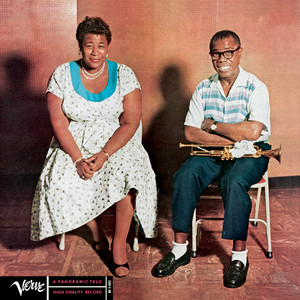
“You say to-may-to, I say to-mah-to“, sang Ella Fitzgerald and Louis Armstrong, to lyrics by Ira Gershwin, before concluding: “Let’s Call the Whole Thing Off“.
Some words are polysemous, and they sometimes lead the layman – and even the lawyer – astray. Résiliation is one of them.
In one sense, it denotes the unilateral decision to bring an open-ended contract to an end, as permitted by Article 1211 of the Civil Code.
In another, it describes termination for breach under Article 1224 of the Civil Code, where such termination happens not to operate retrospectively, as provided by Article 1229 of the same Code.
In yet another sense, résiliation refers to the power of revocation which the law confers on a party, allowing it – by way of derogation from the general law – to bring a contract to an end, even a fixed-term contract, without having to allege any breach on the part of its counterparty.
One thinks first of the ad nutum revocation of Article 2004 of the Civil Code, which allows the principal to terminate the mandate at any time.
One also thinks – and this is the heart of the decision under discussion – of Article 1794 of the Civil Code, which provides: “The employer may terminate, by his sole will, the lump-sum contract, even though the works have already begun, by compensating the contractor for all his expenses, all his works, and everything he might have earned in the undertaking“.
In other words, the employer may bring the contract to an end without having to establish any breach whatsoever on the part of the lump-sum contractor. Such termination for convenience does violence to the binding force of contracts, but it comes at a price. The employer must compensate the contractor “for all his expenses, all his works, and everything he might have earned in the undertaking“.
In short: terminating without cause, yes. Terminating without paying, no.
Does this special provision oust the general law? The answer is not self-evident. Is the maxim specialia generalibus derogant really apt to resolve a conflict between a general rule enacted by the Ordinance of 10 February 2016 and a special rule adopted in 1804? One may doubt it1. Consider the view, professed here and there, that Article 1793 of the Civil Code2 – which prevents the lump-sum contractor from claiming a price increase in the event of a rise in the cost of raw materials or labour – derogates from Article 1195 of the Code on revision for unforeseeability (imprévision). That the text ought to derogate from it, so be it. That is the Sollen. Not the Sein. But that this should be explained by the idea that the legislature of 1804 intended to derogate from a rule which did not yet exist – that we cannot accept.
The same dialectic runs through the decision handed down on 25 June by the Third Civil Chamber of the Cour de cassation3.
In the case at hand, a Polynesian company set out to build a supermarket in Tahiti. The plumbing package was entrusted to a contractor for a global, lump-sum price.
As a result of the Covid-19 pandemic, the site was shut down in March 2020. Contrary to what the Code suggests in matters of force majeure, the impossibility of performing does not vanish all at once: it dissipates by degrees. The resumption proved laborious: the safety coordinator’s protocol was considered too burdensome by the contractor, a site meeting was held in its absence, materials were not ordered – so much so that the employer placed the orders himself.
On 11 May 2020, the employer notified the contractor of “the termination of your contract with immediate effect“, listing a number of complaints. In that letter, it offered no compensation whatsoever within the meaning of Article 1794 of the Civil Code.
Termination for breach without compensation, then – not termination for convenience against payment of an indemnity.
Placed in liquidation, the contractor relied on Article 1794 of the Civil Code, seeking compensation for its loss, consisting essentially in its loss of profit.
The Mixed Commercial Court of Papeete dismissed the claim, holding that the termination, discretionary by nature, was in no way abusive.
The Court of Appeal of Papeete reversed. In the eyes of the lower court, Article 1794 of the Civil Code did indeed apply. It held that the right of termination “is exercised at the employer’s discretion, without his having to allege any fault on the part of the contractor“4. The complaints levelled against the contractor were immaterial: compensation was due “irrespective of whether the grievances relied upon were well founded“.
Thus, for the Polynesian judges, lump sum means Article 1794, and Article 1794 means compensation. The special ousts the general, and any termination of a lump-sum contract can only be a termination under Article 1794, giving rise to compensation, notwithstanding any breaches by the contractor.
That position is open to criticism. That a contractor dismissed for the employer’s convenience should be entitled to compensation for its loss is nothing but justice. It is the price of the employer’s freedom. But that a contractor whose own breaches caused the contract to be terminated should get off scot-free, and indeed be compensated by the employer, would be a Procrustean logic.
The appeal to the Cour de cassation argued – rightly, in our view – that the contractor’s breaches (delays, defective works, abandonment of the site) deprived it of any compensation under Article 1794 of the Civil Code, since the contract had not been terminated on that basis, but on the basis of former Article 1184 (termination for breach).
The Third Civil Chamber allowed the appeal and quashed the judgment.
On the basis of former Article 1184 and Article 1794 of the Civil Code5, the Cour de cassation first recalled that “the seriousness of a party’s conduct may justify the other party’s bringing the contract to an end unilaterally, at its own risk“6.
It then held, in a didactic formula, that “it follows from the combination of these provisions that the employer’s right to terminate a lump-sum contract unilaterally, provided for in Article 1794 of the Civil Code, does not deprive him of the possibility of terminating the contract under the conditions of the general law“.
In holding that compensation was due “irrespective of whether the grievances relied upon were well founded“, the Court of Appeal of Papeete violated those provisions.
In short: the special does not oust the general.
Under Article 1105, paragraph 3, of the Civil Code, the general rules are set aside only to the extent that the special rules derogate from them7; and derogation there must be. Here, however, there is no incompatibility whatever between termination under Article 1794 of the Civil Code and termination for breach. Article 1794 confers on the employer an additional option – that of walking away with nothing to reproach his counterparty with. Its purpose is not to deprive that creditor of the – general – right to sanction the non-performance it suffers. The privilege of the lump sum is not an immunity for the contractor.
The employer thus has the choice of weapons: either termination for cause, or termination for convenience – the latter against payment of an indemnity.
Hence the importance of the termination letter: its drafting is no mere formality. To serve notice, to give reasons, to refrain from offering an indemnity, is to place oneself on the ground of the general law; to say nothing of the grievances and to offer compensation is to place oneself on the ground of Article 1794. One must know which camp one is in.
Takeaways
- Article 1794 of the Civil Code is not exclusive of the general law: the employer retains the right to terminate a lump-sum contract for sufficiently serious breaches by the contractor.
- The stakes are financial: termination for convenience under Article 1794 requires compensation for loss of profit; termination for breach, exercised at the terminating party’s own risk, does not – provided the seriousness of the breach is established.
- Lower courts may not treat the grievances as immaterial on the ground that termination of a lump-sum contract is discretionary: they must examine them.
- Handed down on the basis of former Article 1184, the decision is nevertheless meant to apply under Articles 1224 to 1226 of the Civil Code.
- In practice, the termination letter determines the applicable regime: notice and reasons on the one hand, an offer of compensation on the other – but never both at once.
1 To this effect, B. Boubli, Rép. civ. Dalloz, v° Contrat d’entreprise, no. 137, updated Dec. 2025, who sees in Article 1794 a derogation from the general law that is “more apparent than real”; M. Thioye, J.-Cl. Civil Code, arts. 1788 to 1794, fasc. 20, Marché à forfait, 2021, no. 70 et seq.; Ph. Le Tourneau, Droit de la responsabilité et des contrats, Dalloz Action, 2026/2027, no. 3311.104. Compare M. Faure-Abbad, “Le marché à forfait : une histoire des interprétations doctrinales de l’article 1794 du code civil”, in Mélanges en l’honneur de Jean Beauchard, LGDJ, 2013, p. 553.
2 See for instance L. Thibierge, “La résistance de la force obligatoire du contrat à la révision pour imprévision”, RDC 2024, no. 4, December 2024, p. 121; “L’impact des conflits sur les contrats en cours”, Rev. jurisprudence commerciale no. 1, 28 February 2023 (proceedings of the Droit et Commerce conference, 12 Dec. 2022).
3 On this decision, see D. 2026, p. 1221; F. Dargent, “Marché à forfait : la résiliation peut résulter du droit commun des contrats”, Dalloz actualité, 2 July 2026; “Conditions de résiliation unilatérale d’un marché à forfait”, JCP E 2026, no. 27, act. 614.
4 CA Papeete, ch. com., 11 April 2024, no. 22/00044.
5 Surprising though this may seem, the contract having been concluded in 2019, it is explained by the fact that French Polynesia still applies the former law of contract.
6 A formula drawn from the Tocqueville decision (Cass. civ. 1re, 13 October 1998, no. 96-21.485, Bull. civ. I, no. 300), expressly referred to in the decision under discussion.
7 On the articulation of the general and the special, L. Thibierge, “De la vente et du contrat d’entreprise : fiat lux !”, RDC 2022.