Note on Cass. com., 7 October 2026, no. 25-17.756, F-B
Accessorium sequitur principale. Everyone knows the rule. The accessory follows the principal.
But let us move beyond truisms: what does it actually follow?
The Cour de cassation was presented with a fine textbook case in a decision handed down on 7 October by the Commercial Chamber, presided over by Vincent Vigneau, and to be reported in the Bulletin.
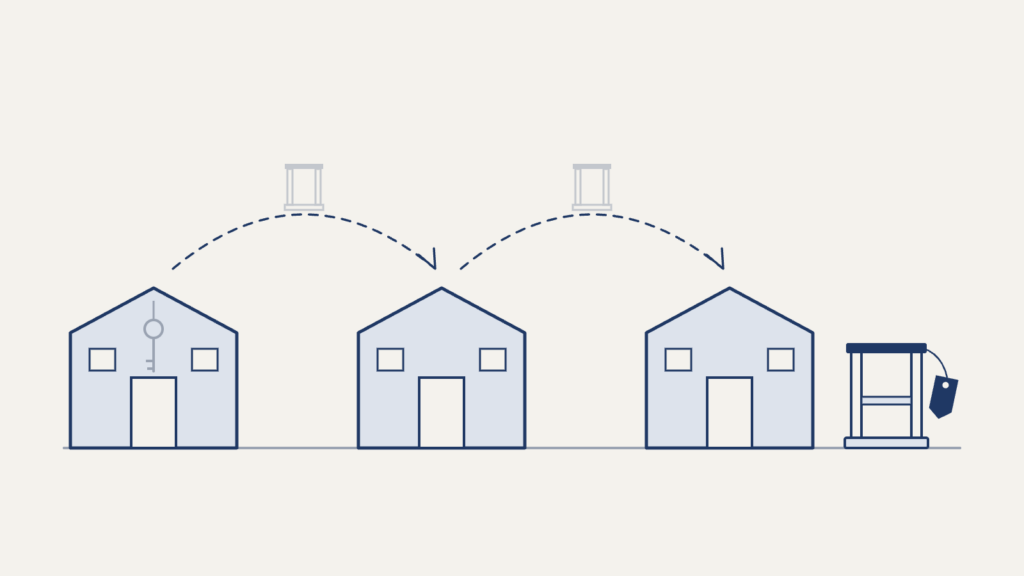
The facts: two successive sales of a lifting station “of the Ecolift Cleaner brand”.
The first sale took place between a company called Dauphiné Isolation Environnement (DIE) and a company called Bio clean.
Bio clean immediately resold the station to Bio lift.
The contract for the first sale contained a retention of title clause. The price had not been paid in full.
The sub-purchaser, Bio lift, suffered repeated breakdowns.
It sued the seller, DIE, under the warranty against latent defects.
The Court of Appeal upheld the claim and rescinded the sale. It ordered DIE to repay Bio lift more than €268,000 by way of the price, plus more than €473,000 in operating losses. Here one recognises the hallmark of the action for damages, which lies only against a seller in bad faith, with whom French law still equates the professional seller,1 an equation that Belgian law has just abandoned.2
Before the Cour de cassation, DIE put forward an argument of seemingly flawless logic: the warranty passes to the sub-purchaser only as an accessory of the thing sold; yet ownership could not pass, since the price had not been paid in full and the retention of title clause stood in the way. Accordingly, the sub-purchaser could not rely on a warranty attached to an ownership that had never changed hands.
Absent any transfer of the principal (ownership), the accessory (the warranty) could not pass to the sub-purchaser, who could not therefore rely on the Lamborghini case law.3
The Cour de cassation flatly rejects this logic.
For the Commercial Chamber, one must not be mistaken about what the principal is. It is not the ownership of the thing, but the thing itself.
According to the Court, while the retention of title clause suspends “the transfer-of-ownership effect of the contract of sale which [sic] until full payment of the price”, it “does not call into question the firm and final nature of the sale, concluded as soon as the parties agreed on the thing and the price”.
Accordingly, “the warranty against latent defects, attached to the initial contract of sale, exists from the moment the sale is concluded, regardless of the existence of a retention of title clause”, so that the sub-purchaser “has standing and an interest to bring proceedings against the initial seller”.
The solution deserves approval.
Retention of title, which Article 2367 of the Civil Code classifies among security interests, merely “suspends the transfer-of-ownership effect” of the contract until full payment. It postpones the transfer of ownership but affects neither the existence of the sale nor the seller’s obligations. The warranty against latent defects, an obligation of the seller, therefore arises with the sale itself.
One should also note the shift made by the Commercial Chamber. The warranty is no longer presented as an accessory of ownership, but as “attached to the initial contract of sale”. This shift is consistent with the wording of two earlier decisions:4 it is the thing sold that the warranty accompanies, not the title to it. And the thing did indeed change hands: DIE delivered it to Bio clean, which delivered it to Bio lift. Moreover, the obligation to deliver extends to the accessories of the thing (Civil Code, Art. 1615).
The solution appears to bear the stamp of pragmatism: what would be the point of holding the thing without the warranty, or the warranty without the thing?
One practical question remains: how does the action for rescission work in this case? Bearing in mind that the initial seller was not paid in full by the first purchaser, should it be ordered to pay the entire price to the sub-purchaser?
To be continued!
Takeaways
- The warranty against latent defects, attached to the initial contract of sale, exists from the moment of the sale, regardless of a retention of title clause, which merely suspends the transfer of ownership (Cass. com., 7 Oct. 2026, no. 25-17.756, F-B).
- A sub-purchaser who proves the sale concluded with the intermediate seller has standing and an interest to sue the initial seller, even if the latter has remained owner because the price was not paid in full.
Notes
- On this excessive equation, see L. Thibierge, “La vente”, in Libres réflexions autour de la réforme des contrats spéciaux, RDC 2023, no. 1, p. 212. The commented decision itself restates it, partially quashing the appeal judgment under Article 1645 of the Civil Code, from which there follows “an irrebuttable presumption that the professional seller knew of the defect in the thing sold” (§ 21). ↩
- L. Thibierge, “Un nouveau droit des contrats spéciaux pour le plat pays”, thibierge.law, 1 October 2026. ↩
- Cass. civ. 1re, 9 October 1979, no. 78-12.502 (Lamborghini); Cass. ass. plén., 7 February 1986, nos. 83-14.631 and 84-15.189. ↩
- Cass. com., 16 October 2024, no. 23-13.318, D. 2024, p. 1822; H. Gourdy, “À qui profite le vice ?”, D. 2025, p. 283; P.-Y. Gautier, RTD civ. 2025, p. 110; B. Bouloc, RTD com. 2024, p. 991; Cass. civ. 1re, 3 September 2025, no. 24-11.383, D. 2025, p. 1516; H. Barbier, RTD civ. 2025, p. 863: the warranty against latent defects “accompanies the thing sold as an accessory”. Compare O. Tournafond, “L’autonomie de la garantie des vices cachés”, D. 2026, p. 1395. ↩