Note on Cass. civ. 1re, 7 October 2026, no. 25-11.954, FS-B
Ordinary contract law is cracking under the repeated onslaught of special regimes.1
A few months ago, in the Comuto decision, the Cour de cassation shrank the adhesion contract to almost nothing, confining it to the rare cases in which Article L. 442-1 of the French Commercial Code is expressly excluded.2
What is left of the “general” law of contract, and does it still deserve its name when its scope is reduced to relations between private individuals, squeezed as it is between consumer law and commercial law?
Yet if our general law is cracking on all sides, it is not only under the blows of the courts.
Sometimes it is the parties themselves who chip away at it.
Parties do occasionally submit, of their own accord, to consumer law, even though it was never meant to govern their contract.
Is consumer law then “at the parties’ disposal”? Let us not go too fast. What the case law allows is an opt-in, not an opt-out.
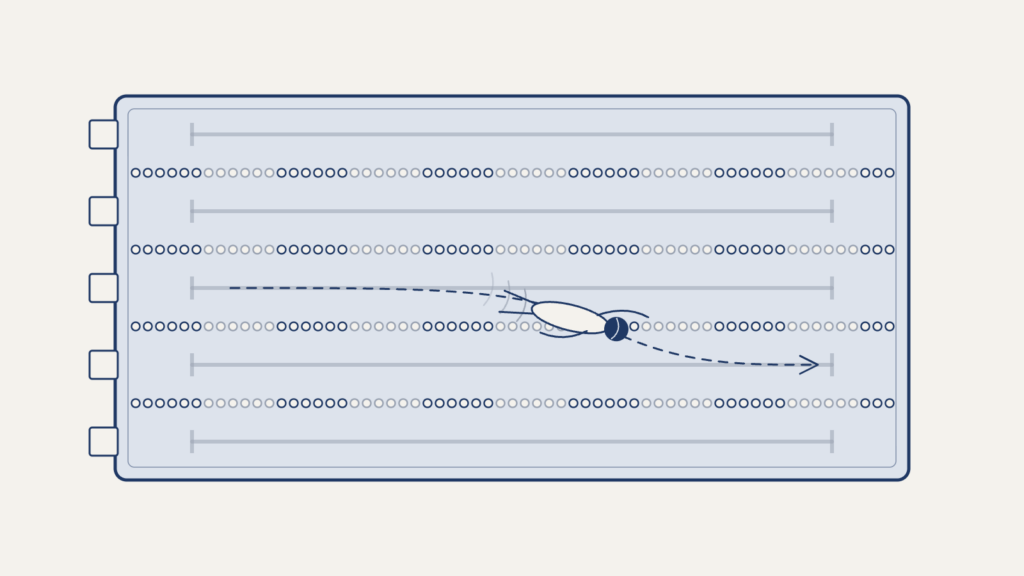
Like a swimmer, a party subject to consumer law cannot switch lanes and swim in that of the general law. Conversely, a party swimming in the central lane may move across to the lane reserved for relations between professionals and consumers.
The option itself is not disputed. The First Civil Chamber has long accepted that the parties may submit their contract to the statutory regime of mortgage credit or consumer credit, provided that their intention is “free from ambiguity”.3 Scholars see in it a form of domestic electio juris.4
The difficulty lies in establishing the parties’ intention to submit to consumer law, especially where that submission is not explicit.
Mortgage lending is a favourite battleground. The French Consumer Code imposes on the lender a demanding set of formalities, backed by sanctions that are no less demanding, foremost among which is the dreaded forfeiture of the right to interest. It is common ground that this regime does not apply to loans “intended, in whatever form, to finance a professional activity”, which includes that of a furnished-property landlord who regularly makes property available (Consumer Code, former Art. L. 312-3, 2°, now Art. L. 313-2, 2°).
What, then, if the loan offer finances a buy-to-let investment… yet reproduces the provisions of the Consumer Code?
For a long time, the Cour de cassation deferred to the sovereign assessment of the lower courts, readily recalling that the mere mention, in the loan offer, of provisions of the Consumer Code was not enough.5 We had occasion to comment on one of those decisions, in which a reference to the rules on doorstep selling, contradicted by a clause of the credit agreement, did not amount to submitting the financing to the Consumer Code.6
Then the case law grew murkier. On 18 December 2024, an unreported decision quashed a Court of Appeal judgment that had held insufficient the mere reference to Articles L. 312-1 et seq.7 On 7 May 2025, a reported decision, by contrast, upheld a Court of Appeal that had found a voluntary submission, while noting that the bank had known, before issuing the offer, of the professional purpose of the loan.8 Should the second decision be read as confirming the first a fortiori, or as requiring a bundle of indications of which the reference would be only one element? Scholarly opinion was divided.
So were the lower courts. Many refused to subject the loan to consumer law where the bank was unaware of the scale of its clients’ investments, the borrowers having presented themselves as non-professional furnished-property landlords; others accepted it as soon as the lender knew the loan was for a rental investment.9
Hence the interest of the decision handed down on 7 October 2026 by the First Civil Chamber of the Cour de cassation, presided over by Carole Champalaune.10
The decision concerns a well-known saga: the Apollonia affair.
By an offer accepted on 29 January 2007 and confirmed by notarial deed, a bank granted a married couple a loan to purchase a flat to be let. The borrowers, registered in the Trade and Companies Register as professional furnished-property landlords, stopped repaying. Sued for payment, they sought forfeiture of the bank’s right to interest for breach of former Article L. 312-7 of the Consumer Code.
In a judgment of 19 December 2024, the Aix-en-Provence Court of Appeal held the claim inadmissible: the loan financed a professional activity, and a pre-printed reference to the Consumer Code was not enough to establish the bank’s voluntary submission. In their appeal to the Cour de cassation, the borrowers argued that the general terms of the offer defined their “scope” by express reference to Articles L. 312-1 et seq.
Citing former Articles L. 312-2, L. 312-3, L. 312-7 and L. 312-33 of the Consumer Code and former Article 1134 of the Civil Code, the Court quashed. It first lays down the rule: “while the parties are free, unless the law provides otherwise, voluntarily to subject to the protective regimes laid down by the Consumer Code contracts that do not fall within them, the exercise of that option must result from a clear and unambiguous expression of intention” (§ 7).
It then sets the threshold: “That expression of intention results from the mere express reference to the provisions of the Consumer Code in the loan offer issued by the bank, which, absent fraud, is in a position to ascertain the purpose of the loan before issuing the offer, and accepted by the borrowers” (§ 8).
The solution, striking in its clarity, calls for three observations.
First, intention is now inferred from a single, objective indicator. The express reference, contained in the offer issued by the lender and accepted by the borrower, amounts to submission. The court no longer has to inquire whether the bank knew, nor to weigh the customer information forms. Correspondingly, the question leaves the realm of sovereign assessment: the Court of Appeal is quashed for breach of the law. Judicial uncertainty is greatly reduced.
Second, the justification given is singular. The Court does not presume that the bank knew the purpose of the loan; it observes that the bank was “in a position to ascertain” that purpose before issuing the offer. A (rebuttable) presumption gives way to an allocation of risk: whoever drafts the offer and controls its preparation bears the consequences of its own terms. A borrower who receives an offer referring to the Consumer Code may thus legitimately rely on the protection it announces.
On this point the Court goes further than the Advocate General recommended. She had proposed treating the express reference as a mere presumption, which the lender could have rebutted by showing that the reference contradicted other terms, that it was ill-suited to the transaction, or that the lender was unaware of the rental purpose.11
Of these three escape routes, the decision retains none.
One exception alone remains: fraud.
Finally, this fraud exception will no doubt generate abundant litigation, since it is the only way out. One thinks in particular of the role of fraud in the law of suretyship, where a surety knowingly has a third party write the handwritten statement required before 2022 in order later to escape liability.12 Banks will surely argue that a borrower who presents himself as a non-professional furnished-property landlord, while concealing his other purchases, commits fraud. But concealment, which several Courts of Appeal held sufficient to make the submission ambiguous, is not necessarily fraud. Fraud presupposes a manoeuvre designed to mislead the lender; an inaccurate statement that the bank was “in a position” to check should not suffice. Otherwise, the rule laid down by the decision would be emptied of its substance.
In short, banks would be well advised to exercise great caution. Any professional loan offer which, for convenience or through the use of a single template, refers to the articles of the Consumer Code exposes the lender to the entire regime referred to, forfeiture of interest included.13 A review of offer templates is called for and, where that is the lender’s intention, a clause expressly excluding the application of those provisions.
As for the civil lawyer, he can only note, with great regret, the balkanisation of the general law.
Takeaways
- The parties may voluntarily submit to the Consumer Code a loan that falls outside it, by a clear and unambiguous expression of intention.
- That intention results from the mere express reference to the provisions of the Consumer Code in the offer issued by the bank and accepted by the borrower, the bank being in a position to ascertain the purpose of the loan (Cass. civ. 1re, 7 Oct. 2026, no. 25-11.954, FS-B).
- Only fraud allows the lender to escape the regime it referred to, including forfeiture of the right to interest.
Notes
- See, e.g., S. Tisseyre, “La concurrence exogène”, and L. Vitale, “La concurrence endogène”, in Réforme du droit des obligations : on s’était dit rendez-vous dans dix ans, L. Thibierge (ed.), RDC 2026, no. 3, p. 226 et seq. ↩
- Cass. com., 13 May 2026, no. 24-17.137, FS-B; L. Thibierge, “Requiem pour un contrat d’adhésion”, thibierge.law, 14 May 2026; by the same author, “Après le requiem, l’oraison funèbre”, thibierge.law, 23 September 2026, on Cass. com., 23 September 2026, no. 24-20.775, FS-B. ↩
- Cass. civ. 1re, 1 June 1999, no. 97-13.779, Bull. civ. I, no. 188; Contrats, conc. consom. 1999, comm. 168, note G. Raymond; Cass. civ. 1re, 9 March 2022, no. 20-20.390, F-P+B, D. 2022, p. 508; C. Hélaine, “De la soumission volontaire aux règles du droit de la consommation”, Dalloz actualité, 28 March 2022. ↩
- J.-B. Seube, “L’electio juris en droit interne ou la soumission volontaire par les parties à un droit protecteur”, in Liber amicorum Jean Calais-Auloy, Dalloz, 2003, p. 1009; D. Bureau, “L’extension conventionnelle d’un statut impératif. Contribution du droit international privé à la théorie du contrat”, in Mélanges en l’honneur de Philippe Malaurie, Defrénois, 2005, p. 125; see also H. Barbier, “L’indisponibilité de la qualité de consommateur ou de professionnel des parties à un contrat”, RTD civ. 2016, p. 354. ↩
- Cass. civ. 1re, 23 January 2019, nos. 17-23.919, 17-23.920, 17-23.921 and 17-23.922; Cass. civ. 1re, 19 January 2022, no. 20-14.241. ↩
- L. Thibierge, “Des limites de la soumission au droit de la consommation”, La Grande Bibliothèque du Droit, on Cass. civ. 1re, 9 March 2022, no. 20-20.390. ↩
- Cass. civ. 1re, 18 December 2024, no. 23-15.688, F-D; RD bancaire et fin. 2025, comm. 7, obs. N. Mathey; to the same effect, earlier, Cass. civ. 1re, 4 April 2006, no. 04-15.813. ↩
- Cass. civ. 1re, 7 May 2025, no. 23-13.923, FS-B, D. 2025, p. 884; J. Bruttin, “Soumission volontaire au code de la consommation d’un contrat de crédit immobilier destiné à un investissement locatif : champ d’application, effets et limites”, RDI 2025, p. 303; by the same author, “Varia Apollonia”, RDI 2025, p. 566; A. Gouëzel, “L’établissement de crédit est responsable de plein droit du fait des démarcheurs auxquels il a donné mandat”, Gaz. Pal. 9 Sept. 2025, GPL481k3; J. Lasserre Capdeville, “Responsabilité de plein droit du banquier du fait des démarcheurs et précisions sur le droit applicable au crédit immobilier”, RLDC no. 243, Jan. 2026. ↩
- Refusing submission, see, e.g., CA Paris, 27 March 2025, no. 24/13637; CA Bordeaux, 4 April 2025, no. 24/04737; CA Bourges, 20 February 2026, no. 25/00151; CA Montpellier, 17 February 2026, no. 25/03148. Accepting it: CA Lyon, 28 August 2025, no. 22/06023; CA Rennes, 17 February 2026, no. 25/01755. Decisions listed in the reporting judge’s report. ↩
- Cass. civ. 1re, 7 October 2026, no. 25-11.954, FS-B, ECLI:FR:CCASS:2026:C100581; report of Ms Robin-Raschel, conseillère référendaire (reporting judge), and opinion of Ms Cazaux-Charles, Advocate General, both published on the Cour de cassation website. Remanded to the Montpellier Court of Appeal. ↩
- Opinion of the Advocate General, pp. 12-13. ↩
- Cass. com., 5 May 2021, no. 19-21.468; Cass. com., 25 January 2023, no. 21-11.145; Cass. com., 6 May 2026, no. 25-14.501: a surety who commits fraud in writing the statutory handwritten statements may not rely on their irregularity (fraus omnia corrumpit). ↩
- But see Cass. civ. 1re, 3 November 2016, no. 15-23.405: voluntary submission does not bring with it the two-year limitation period of Article L. 218-2 of the Consumer Code (formerly L. 137-2), which is reserved to consumers. ↩